Decode ADITO URLs and Filter Fragments

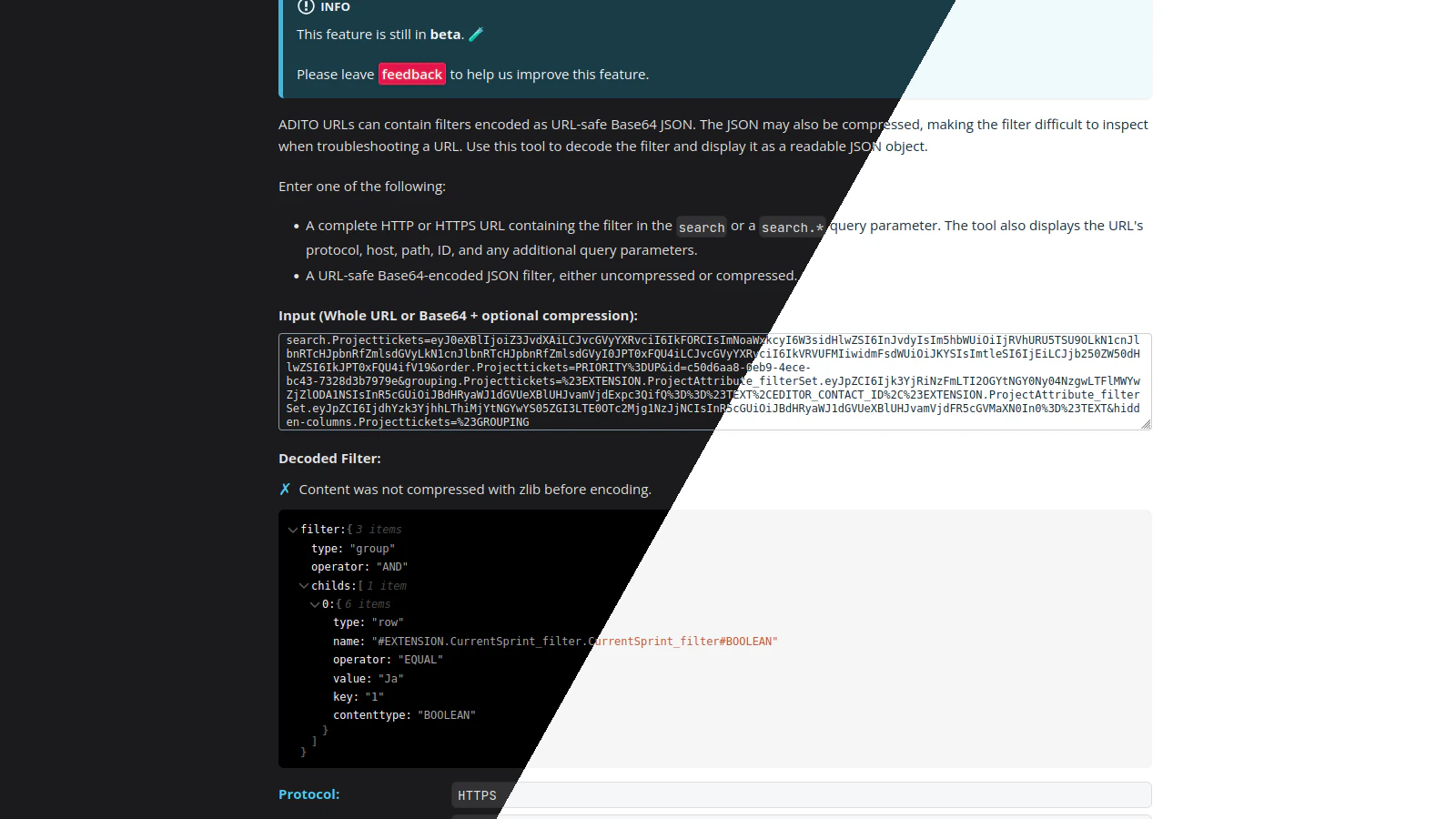
A new tool is now available in the Dev Tools section: the URL and Filter Decoder.
Use it to decode ADITO URLs and encoded filter fragments into readable JSON.

A new tool is now available in the Dev Tools section: the URL and Filter Decoder.
Use it to decode ADITO URLs and encoded filter fragments into readable JSON.
ADITO-LLM has a new model: adito-llm-brizo. It is available today.
It is not the default yet. The bare adito-llm alias keeps pointing at the previous model until 31 August 2026. This post explains what changed, and why model names now work the way they do.

This documentation site now has a Dev Tools section.
Version 2026.1.0 is now available.
The features included in this release are covered in our monthly Release Notes. Explore the individual entries for detailed information and additional context.

For a long time, digital sovereignty occupied the same corner of the corporate mind as cookie banners and compliance training: probably necessary, mildly irritating, and easy to ignore.
Then it turned out that it actually matters whether a company’s digital infrastructure is subject to the laws and interests of another continent.

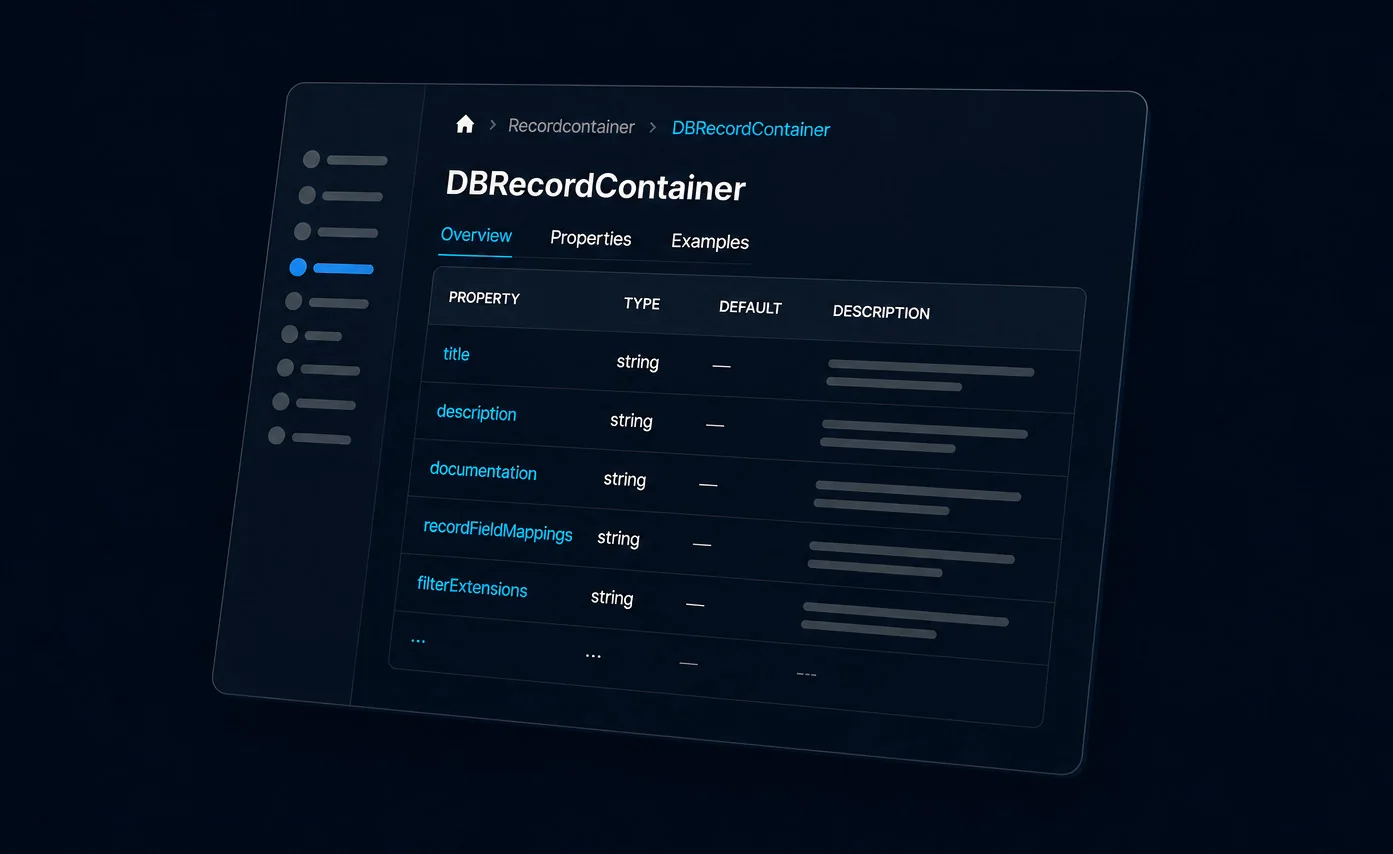
When configuring data models in ADITO, knowing which properties are available and what they control has so far required either hands-on exploration in the Designer or reading through source comments.
There is now a better way.

The ADITO UnifiedEntityModel is about to take a major step forward.
With neonRowRecalculationMode, the way EntityModels look at process dependencies, calculations, and a
perspective beyond row-level dependencies is changing fundamentally.
Instead of treating recalculation as one familiar chain of work, the new approach opens the door to a much
smarter view of what really needs to happen, when it needs to happen.
The result is expected to have a major positive impact on performance. At the same time, this is not the finish line yet. It is an active development step, a clear move in the right direction, and the foundation for improvements that will continue to grow from here.
With the update of the ADITO Designer plugin "Standalone Transpile and Deploy" to 1.2.0, Transpile v2 is now officially released in beta.
Most importantly, v2 is no longer limited to dev systems and can now be used on production systems.
This is the release step many teams were waiting for.
Not everything important happens on the publication date of a major release. Many improvements become relevant before that point and should be communicated accordingly.
That is why we are primarily changing how we communicate new features and technical improvements. What is not changing is which kinds of topics belong in minor or major releases. Instead of waiting to summarize changes only with a major version, we now communicate them through monthly Release Notes that highlight new features, improvements, and relevant technical changes in a timely way.
The JDito TypeDoc documentation is now available on the help page in a clear and structured format.
It gives you one central place to look up globally available JDito objects, functions, and helper APIs instead of piecing information together from different sources.